Is Your Dog Eating Too Fast? 5 Signs to Watch Out For
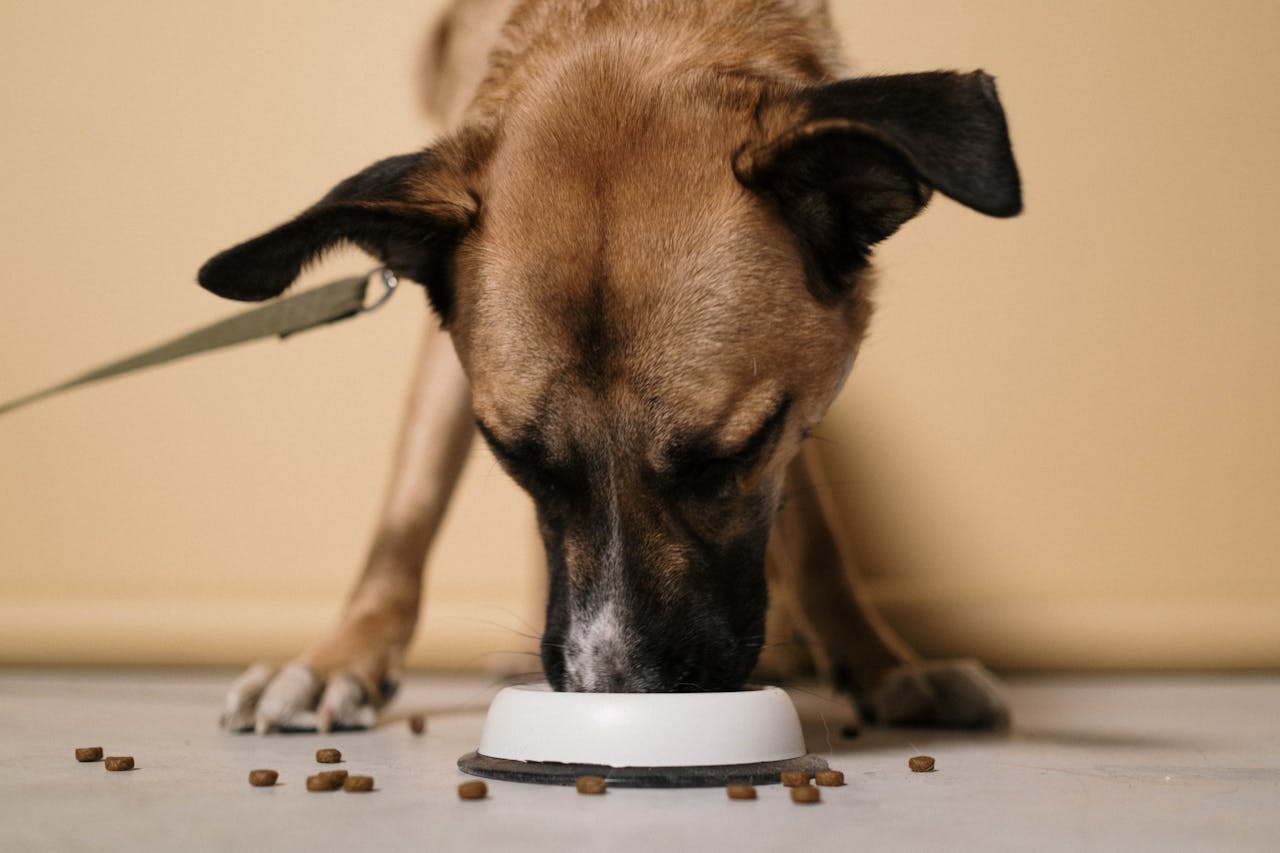
You put the bowl down. You blink. It's empty.
If your dog eats like they've been warned the kitchen is closing in 8 seconds, you're not alone and it's not just an endearing personality quirk. Dogs who eat too fast are at real risk: from choking and regurgitation at the mild end, to Gastric Dilatation-Volvulus (GDV) a condition that can become fatal within hours at the severe end.
The good news is that your dog's eating behavior tells you a lot, if you know what you're watching for. Here are five signs that your dog is eating too fast, and what's actually happening inside their body when they do.
If your dog is already showing frequent distress around meals vomiting regularly, visibly uncomfortable after eating, or bloating speak to your vet first before trying any intervention at home.
Why Dogs Eat Too Fast
Fast eating isn't a discipline problem. It's almost always rooted in instinct or experience:
Survival instinct. Dogs are descended from animals that competed for food. Even a dog who has never missed a meal may eat like the bowl might disappear.
Multi-pet households. If there's another animal nearby (or even nearby-ish), your dog may feel like every meal is a competition. The presence of other pets doesn't have to be threatening just existing nearby can trigger this response.
Rescue background. Dogs who experienced food scarcity early in life often carry that anxiety into permanent homes. The bowl being full doesn't always override what the body learned to do when it wasn't.
High food motivation. Some dogs are simply extremely food-driven certain breeds especially (Labradors, Beagles, and Pugs, we're looking at you). For them, meals are an event. A 10-second event.
Irregular feeding schedules. Dogs whose mealtimes are unpredictable often eat faster when food does arrive. Consistency in when they eat shapes how they eat.
Understanding the "why" matters because the fix usually addresses the cause not just the symptom.
5 Signs Your Dog Is Eating Too Fast
1. The gulp-and-gag cycle
You hear it before you see it: a deep, rapid swallowing sound, sometimes followed by a gag, a cough, or a short pause where your dog seems to reset. This is food moving too quickly through the esophagus. Dogs are meant to chew not just for texture, but because chewing triggers the enzymes and signals that begin digestion. When they skip that step, the body scrambles to catch up.
What to watch for: Repeated gulping sounds, visible neck tension while eating, gagging mid-bowl without vomiting, or a brief "stuck" expression between bites.
2. Vomiting (or regurgitating) after meals
There's a difference between vomiting and regurgitation, and it matters. Vomiting involves the stomach contracting your dog will hunch, heave, and bring up partially digested food. Regurgitation is passive food comes back up almost immediately, undigested, often in a tubular shape (the shape of the esophagus). Both can happen with fast eating.
When food is swallowed whole and fast, the stomach receives more volume than it can process cleanly and sends it back. If this is happening after most meals, it's not a one-off. It's a pattern.
What to watch for: Vomiting within 30 minutes of eating, undigested kibble in the vomit, or food coming back up almost immediately after swallowing (regurgitation).
3. Choking or coughing mid-meal
A dog who's eating too fast is taking pieces of kibble or chunks of wet food down before they're properly positioned in the throat. This can cause real choking, which looks like sudden freezing, pawing at the face or mouth, extended neck, or a panicked expression. Even when it doesn't become a full emergency, repeated choking is a sign that the airway is being stressed.
Less dramatic but still worth noting: a persistent post-meal cough or throat-clearing sound. This can indicate food particles made contact with the larynx on the way down.
What to watch for: Sudden stillness mid-meal, pawing at the mouth or throat, extended neck posture, a panicked look, or coughing that starts immediately after eating.
4. Excessive drooling or foaming at the mouth during meals
A little drool before mealtime is completely normal Pavlov was onto something. But excessive salivation during eating, or foaming around the mouth, suggests the salivary glands are working overtime to compensate for food that isn't being chewed properly.
Saliva exists to lubricate food and begin breaking down starches. When food moves too fast, the body over-produces saliva in an attempt to ease the passage. It's compensating for a problem, not causing one.
What to watch for: Heavy drooling during (not just before) the meal, foam or bubbles around the mouth, saliva pooling under the bowl.
5. Bloating, discomfort, or restlessness after eating
This is the sign that warrants the most attention. After a fast meal, dogs often swallow significant amounts of air along with their food a condition called aerophagia. This trapped air can cause the stomach to expand. In mild cases, you get a visibly distended belly and restlessness. In severe cases, this can progress to GDV: the stomach fills with gas and rotates on its axis, trapping contents and cutting off blood supply. It is a veterinary emergency.
GDV can develop rapidly within hours of a meal and the early signs are easy to miss or dismiss as post-meal tiredness.
What to watch for: A visibly round or tight belly after eating, pacing or inability to settle, repeated unproductive retching (attempting to vomit without bringing anything up), labored breathing, or a dog who seems distressed but can't tell you why. If you see unproductive retching alongside a distended belly, go to the vet immediately.
Why This Matters More Than You Think
Occasional fast eating is one thing. A dog who consistently eats like this is accumulating risk:
- Poor nutrient absorption food that isn't chewed doesn't digest as efficiently. Your dog may be eating well but absorbing less than they should.
- Worsening food anxiety fast eating and food guarding often feed each other. A dog who eats anxiously tends to become more protective of the bowl over time.
- GDV risk particularly in large, deep-chested breeds: Great Danes, German Shepherds, Standard Poodles, Dobermans, Weimaraners. These breeds have the anatomy that makes stomach rotation more likely, and the risk increases with fast eating, one large meal a day, and eating from an elevated bowl.
The Most Effective First Step: A Slow Feeder Bowl
Slow feeder bowls work by replacing a flat surface with ridges, mazes, or raised sections so your dog has to work around obstacles to reach their food. The meal takes longer. Each bite is smaller. The whole process shifts from "inhale" to something closer to actual eating.
What this changes:
- Eating time extends from seconds to several minutes
- Air swallowed per meal drops significantly
- The chewing reflex actually engages
- Post-meal discomfort reduces noticeably in most dogs
Vets recommend slow feeders as a first-line intervention because they're simple, they work, and they carry no risk. They also double as a mild enrichment activity your dog has to think a little to eat, which is not a bad thing for a brain that's used to 8-second meals.
Other strategies that complement a slow feeder: splitting one meal into two smaller ones, using a snuffle mat for part of the meal, removing competitive pressure in multi-pet homes by feeding dogs separately, and keeping feeding times consistent.
A Final Note
Fast eating is common. It's also one of the easier mealtime problems to address but only if you catch it. If your dog is showing several of these signs consistently, start with the simplest intervention (a slow feeder bowl, a feeding schedule) and monitor. If symptoms like vomiting or post-meal distress continue despite changes, your vet is the right next step.
Mealtime should be calm. Not a sprint.
At Chonky Paws, the No Rush Slow Feeder Bowl was designed for exactly this because Chang's fast eating is what started all of this in the first place, and we know what it looks like when a pet parent worries about their animal at dinnertime.
Vet-Approved Ways to Prevent Dog Bloat (GDV) Safely
How to Check Your Dog for Ticks
Related Posts
How to Check Your Dog for Ticks
Vet-Approved Ways to Prevent Dog Bloat (GDV) Safely
New Guidelines for Animal Blood Transfusions in India
Clean Home, Happy Pup: Slow Feeders That Cut Mealtime Mess
Signs Your Dog is Overheating in Summer
Cat Toy Anxiety: What to Watch For & Better Options